
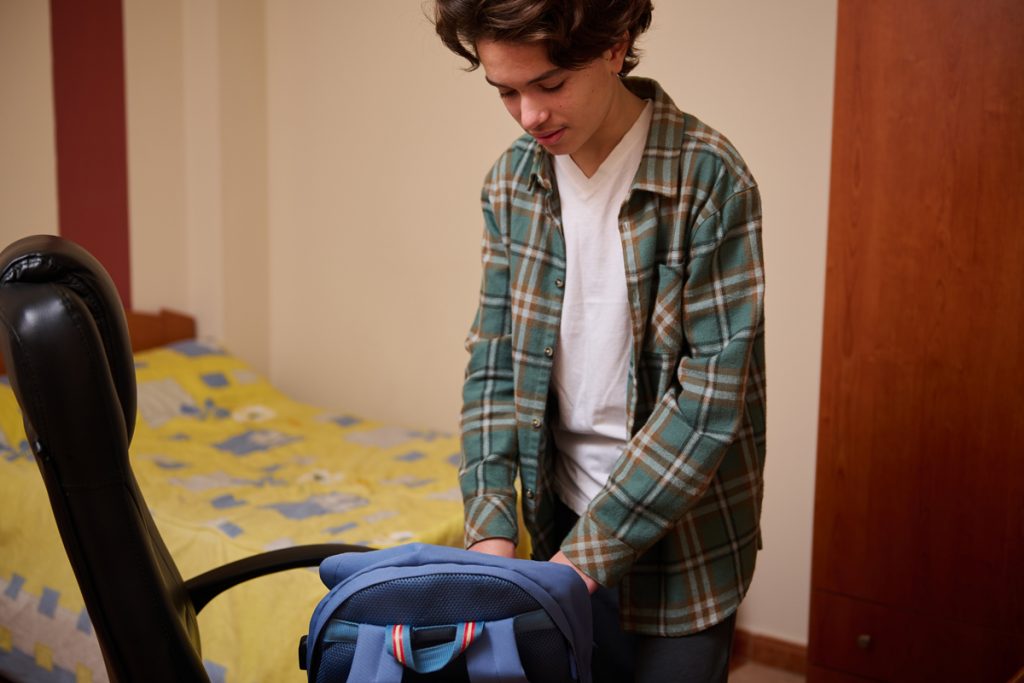
What goes into your teen’s bag should be your last worry when it’s time for them to start residential treatment. Many families tell us that it’s this moment, with the suitcase in front of them, when everything becomes real.
We want to make the packing process as simple and straightforward as possible. What your teen brings—and what they leave at home—lets us have a safe, structured, and comfortable place where our teens can focus on healing. Below, you’ll find a complete guide on what to pack, what to expect when you arrive, and how we’ll support your family every step of the way.
Required Documents & Insurance Cards
- A list of current medications
- Up-to-date insurance cards
- Government-issued photo ID
- Any relevant medical records (we can help you request them)
We’ll use these documents during admissions to verify your insurance and make a copy so we can keep them on file. This will let us submit claims to your insurance company and appeal any disputes they may have, giving you peace of mind.
Prescription Medications & Medication Rules
- Prescription and necessary OTC medications in original bottles
- Medically necessary equipment (CPAP, EpiPen, glucose monitors, etc.)
Please note that all medications are subject to inspection upon arrival. Medication will be kept secure by our clinical team and dispensed according to prescription schedules. Teens at Family First will not have access to their full medication supplies at once. We keep all parents in the loop before making any changes to medication plans.
Clothing & Shoes: How Much to Pack (Laundry Schedule)
- 7-10 t-shirts
- 4-5 pairs of shorts
- 1-2 pairs of pants
- 1-2 pairs of lounge/sweatpants
- Athletic wear
- Swimsuit
- Underwear
- Socks
- Tennis shoes
- Sandals or flip-flops
- Casual footwear
- Light rain jacket (If you have one)
We’ll do laundry generally once a week, so pack enough clothes for that. Also, remember that we are located in South Florida. There’s plenty of sun and chances to get out on the water, so pack a swimsuit and some sandals if you have them. Remember, though, that we’re also subject to rain, so if you have a rain jacket, include it. Teens at Family First stay active, so comfortable shoes are also required.
Toiletries & Personal Care (What’s Allowed)
- Alcohol-free toiletries
- Toothbrush & toothpaste
- Hairbrush/comb
- Skincare and haircare products
- Deodorant
- Sunscreen
Pack what’s in your teen’s normal hygiene routine. Make sure there aren’t any products that contain alcohol—so no mouthwash.
Comfort Items & Sensory Supports
- Creative outlets (guitar, paint set, Lego, journal, etc.)
- Comfort items (a blanket, stuffed animal)
- Sensory supports (earplugs, headphones, fidget toy)
Your teen’s stay at Family First will be about growth. Growth means learning to stay comfortable during stressful times, and using tools to do so is just fine. Please just don’t bring something your teen would be sad to lose—just in case. If you’re not sure if something would be appropriate to bring, just ask a member of our admissions team.
Schoolwork, Books & Approved Electronics
- Any relevant textbooks
- Books for leisure
- Approved electronics (phone, headphones, tablet, laptop)
Our academic team will help your teen stay on track and even get ahead in school. Make sure they have the books they need and any they might want to read. We will also screen electronics for approval. Your teen may not have total access to them all the time and will need to check them out during approved times.
Seasonal & Climate-Specific Packing (Winter/Summer)
Since we’re in South Florida, seasonal clothing isn’t too much of an issue. However, rain and sun are. Some year-round essentials that may be helpful include:
- Comfortable short-sleeve t-shirts and activewear shorts
- UPF (sunblocking) long-sleeve shirts
- Rain jacket
- Sandals
- Sunscreen
- Sunglasses
Specialty Programs: Extra Items for Eating Disorders, SUD, OCD, Autism
If your teen has specific treatment considerations, the following may be helpful:
- Extra comfort items
- Sensory supports (weighted lap pad, fidgets)
- Safe containers for medically necessary items
- Adaptive tools (spoons, grips, noise-canceling earmuffs)
- Clothing preferred for sensory sensitivities
If you’re unsure whether something is allowed or needed, our admissions team will guide you.
Prohibited Items: What Not to Bring to Residential Treatment
- Any illicit products (including drugs, blades, or weapons)
- Vapes, cigarettes/cigars, or smokeless tobacco products
- Inappropriate clothing
- Medication not in original packaging
- Supplements (including protein powder or pre-workout)
- Aerosol colognes
Family First is a safe place for your teen. We screen everyone coming in to make sure they don’t have anything that could harm or distract anyone here. Please do not pack any dangerous or illegal items.
What the Family First Program Provides
Family First will provide the following:
- Bedding and towels
- Laundry detergent
- Nutritious meals and snacks
- Academic supplies (beyond personal notebooks)
- Enrichment and adventure therapy equipment
When you’re packing, focus on providing the essentials and personal items that help your teen feel comfortable, regulated, and connected to home.
If You Forget Something: Shipping & Care Packages
It happens—we expect it.
If you forget an item:
- We will help source essentials immediately
- Parents can ship approved items directly to our campus
- We’ll notify you if items need to be replaced
- You may send care packages following our approved guidelines
Please do not send food, electronics, or any restricted items. Staff will review incoming packages for safety.


Frequently Asked Questions
How are personal items inspected and inventoried at intake?
Our admissions team will gently review all belongings with your teen. This helps ensure safety by preventing prohibited items from entering the community.
Where are valuables stored, and what’s your policy on cash, cards, and jewelry?
We recommend leaving valuables at home. If needed, small valuables can be stored securely by staff and returned at discharge.
How are medically necessary devices (CPAP, glucometers, EpiPens, CGMs) handled?
Our team will review prescriptions and work with your teen to ensure they keep using them or have access to them as needed.
Are accommodations available for mobility aids or orthotics, and what documentation is required?
Absolutely. We work with families to ensure accessibility and safety. Bring a doctor’s note or prescription so we can keep it on file.
Can my teen bring musical instruments or creative-hobby supplies (art materials, sketchbooks)?
Absolutely, and we encourage it! We want your teen to truly grow during their time here, and creativity is such an important part of that journey. If you’re not sure if something would be okay to bring, just get in touch with our team.
Do you have clinic-approved vendors or an on-site store for essentials we didn’t pack?
Yes, we can help coordinate approved purchases from local retailers when appropriate.
What’s the policy on personal photos or small mementos (albums, frames, digital frames)?
We’d prefer physical photos/mementos, please, and encourage teens to bring them. Try to bring copies of them so they don’t get lost accidentally.
What’s the process if an item is lost, damaged, or needs replacement during treatment?
We maintain a storage and tracking system, but teens are encouraged to bring only replaceable items. If something needs to be replaced, we’ll reach out to you to coordinate a replacement.
How are items returned at discharge, and do families sign an inventory?
Yes. Stored items are released after completing the discharge process.
Who do we contact with packing questions before admission?
You can contact our team by calling 888.904.5947, and we’ll be happy to help.
Are there accommodations for gender-specific or cultural modesty requirements?
Yes. We honor and accommodate cultural practices, modesty requirements, and gender-specific needs whenever clinically appropriate.