
Note for readers: This page discusses the topic of self-harm. If you or someone you know is struggling with thoughts of suicide, the Suicide and Crisis Lifeline is available 24/7 at 988. Or, if you are concerned about an emergency situation, dial 911.
As a parent, you know there’s a fine line between normal teenage behavior and something more serious. Maybe your son has stopped joining family beach outings, refuses to go to school, or has withdrawn from friends and activities. Watching your child struggle with mental health challenges, especially when outpatient therapy hasn’t helped, can be incredibly difficult.
The decision to consider residential treatment isn’t easy. It requires thought, love, and a clear understanding of what your child needs to heal and grow. For many families in Palm Beach Gardens, Family First’s teen residential program provides the focused care their teen can’t get through traditional therapy.
Signs your teen needs more support
It’s not always easy to know when your teen needs more than weekly therapy or outpatient care. The key is to recognize the difference between typical adolescent challenges and deeper issues. Sometimes, acting out is the only way teens can communicate that there is something deeper they’re struggling with.
Behavioral indicators
The signs of mental health challenges can be easy to miss, but knowing what to look for can make all the difference. These are some behavioral red flags to watch out for:
- School troubles: Skipping school, slipping grades, or frequent conflicts with teachers can point to deeper mental health struggles—not just academic challenges.
- Social withdrawal: Avoiding family time, quitting activities they used to love, or isolating from friends may signal emotional distress.
- Risky behaviors: Substance use, self-harm, or aggression are serious warning signs that your teen may be in crisis.
If you notice any of these behaviors, take them seriously. It’s never too early to reach out for help—your support could make all the difference.
Emotional warning signs
Sometimes, though, there are clear signs that teens need extra mental health support. These include:
- Mood changes that don’t go away: Long-lasting depression, severe anxiety, or mood swings that feel out of proportion to the situation can signal a problem.
- Crisis episodes: Suicidal thoughts, panic attacks, or intense emotional outbursts need immediate attention. These moments often go beyond what outpatient therapy can handle.
- Loss of interest in activities: If your teen loses interest in hobbies, sports, or relationships they once loved, it could indicate depression or another mental health challenge.
It’s hard to watch your child struggle with their mental health. You might not have all the answers when they do, and that’s okay. Reaching out for help is the right thing to do.
When outpatient treatment isn’t enough
A lot of families begin with outpatient therapy, but sometimes that’s not enough for every teen. If your teen’s behavior is getting worse or their symptoms aren’t improving, even with professional help, it might be time to look into a more intensive option.
Residential treatment can also be a good choice if your teen’s challenges are putting a strain on your family and making daily life feel overwhelming. A structured environment can give them the space they need to start healing.
What residential treatment offers
Residential treatment provides a level of care and support that outpatient services can’t match. At Family First, we’ve created a safe, structured environment in Palm Beach Gardens where teens can address their challenges and develop the skills they need to move forward.
Around-the-clock care
One of the biggest benefits is the 24/7 support it provides. Teens aren’t going back to potentially triggering environments every day—instead, they’re in a safe space with constant supervision and immediate help whenever they need it.
The structured routine in residential care is another major advantage. Days are thoughtfully planned with a healthy balance of therapy sessions, schoolwork, physical activity, and downtime. This consistency helps teens find stability and build habits that support their healing journey.
Comprehensive therapy
Residential treatment provides comprehensive care to address various aspects of mental health, and at Family First, we’re committed to using proven, evidence-based approaches, like:
- Dialectical behavior therapy (DBT)
- Cognitive-behavioral therapy (CBT)
- Eye movement desensitization and reprocessing (EMDR)
- Medication management
We specialize in working with adolescents, offering programs tailored to the unique needs of boys aged 12–18. Our treatment plans are individually designed to address the unique struggles each teenage boy faces.
Community and connection
At Family First, our small group settings are designed to provide personalized support and foster meaningful connections. With a 3:1 staff-to-client ratio, every teen gets the attention they need while building bonds with peers who understand their struggles. These peer relationships are invaluable, helping teens feel less alone and creating a supportive network that plays a key role in their healing journey.
We also believe family involvement is essential to success. Through therapy sessions and regular updates, we keep parents engaged throughout the process, ensuring they’re prepared to support their teen when they return home. Together, we create a path toward lasting growth and connection.
When to consider residential care
Deciding if residential treatment is right for your teen can feel overwhelming, but it really comes down to what they need and what works for your family.
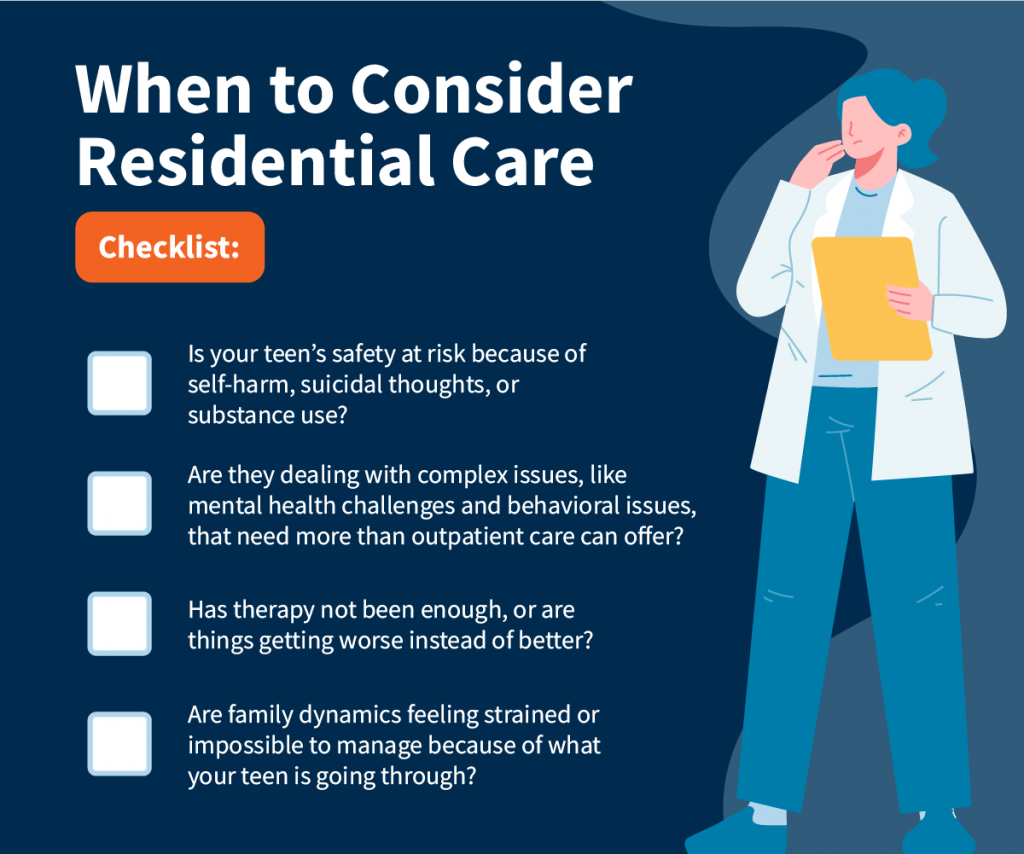
It’s a tough choice, no doubt. But for teens needing more support than outpatient care can provide, residential treatment has the potential to truly turn things around.
What to expect from teen residential treatment in South Florida
Parenting a teenager with mental health challenges can be overwhelming—but you don’t have to face it alone. Our programs provide the comprehensive care and support your teen needs to heal and grow in a nurturing environment.
Why choose Family First?
Our 45–90 day programs are designed to address the most common and complex teen mental health challenges. Anxiety, depression, PTSD, ADHD, and substance use are just some of the conditions we treat. Here’s what sets us apart:
- Tailored care: Individual and family therapy, academic support, and enrichment activities customized for each teen and family.
- Experienced team: Over 120 years of combined clinical experience in adolescent mental health.
- Medical support: Daily check-ins with our nursing team and regular psychiatric appointments to monitor progress and adjust treatment plans as needed.
- Holistic approach: We focus on long-term healing—not just quick fixes—by helping teens explore their mental health.
- Boys-only program: Our boys-only program provides a supportive and non-judgmental environment for your son to heal and grow.
- Personalized academic support: We offer individualized education plans to help teens stay on track with their academics while receiving treatment.
Our program combines expert care, academic support, and skill-building to prepare your teen for lasting success. We’re committed to equipping them with the resilience and tools they need to thrive well beyond their time with us.
How to take the next step with Family First
If you’re ready to explore options for your teen, start with a free assessment by calling us at 888.904.5947 or speak with our admissions team online. We’ll take the time to understand your teen’s challenges, review their history, and help determine if our program is the right fit for your family.
We’re here to make the process as stress-free as possible. From insurance verification to financial planning, we’ll guide you every step of the way, so you can focus on what matters most—your teen’s recovery.
Want to see where healing begins? Come tour our residential center in Palm Beach Gardens. With home-like accommodations, a CrossFit gym, adventure therapy areas, clinical spaces, and classrooms, our campus is thoughtfully designed to support growth, recovery, and a brighter future.
Clinical Reviewer